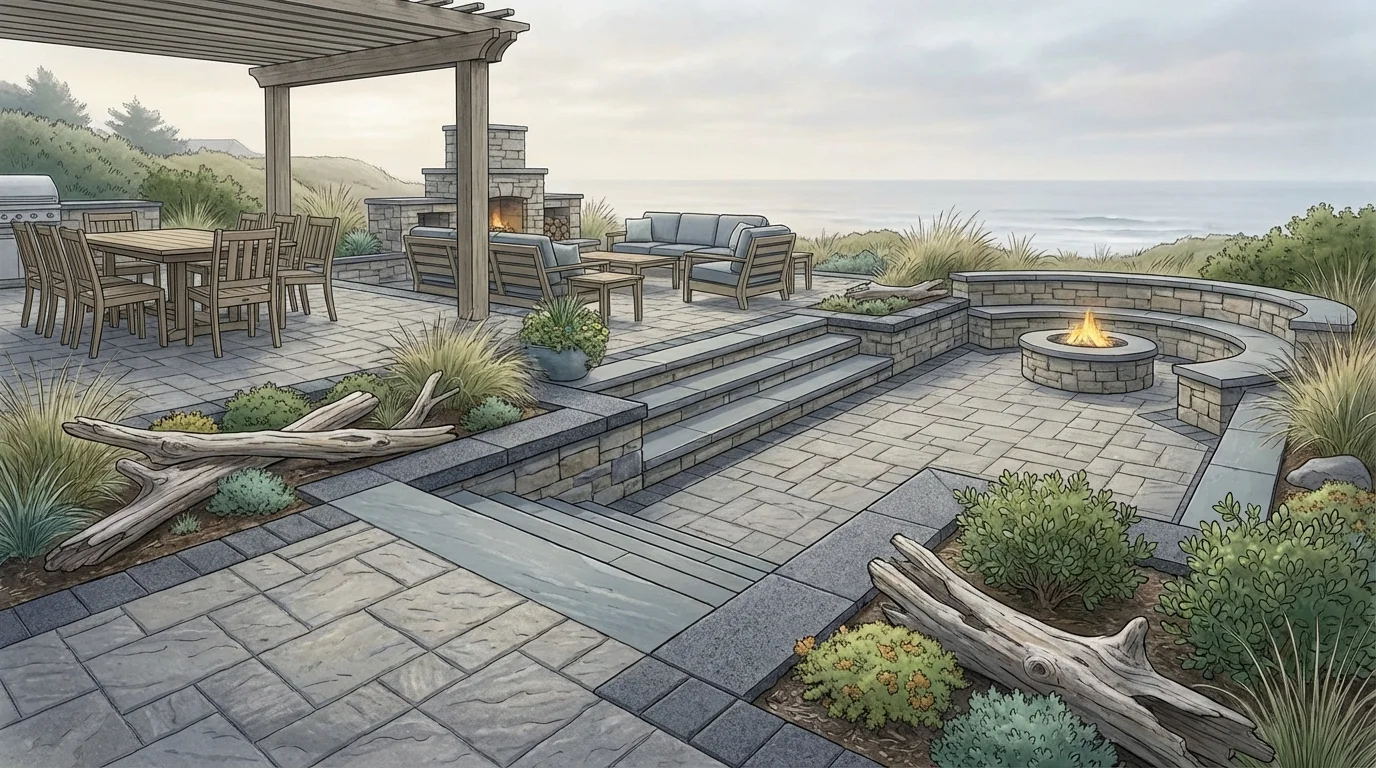
2025 Patio Trends for New England Coasts
Elevate your backyard with 2025's top patio designs that withstand freeze-thaw cycles and blend with coastal vibes.
Massachusetts homeowners know the struggle all too well: uneven terrain on coastal properties turns simple outdoor dreams into costly headaches. Sloped yards in towns like Peabody, Swampscott, and the South Shore demand smart solutions that combat harsh New England winters while maximizing those precious summer days[1][2]. Basic concrete slabs crack under pressure, but today's trends prioritize durability and style—think natural stone patios like bluestone or granite borders paired with textured paver patios for a high-end look at a practical price[1]. These materials mimic New England's rugged landscape, resist moisture, and require minimal upkeep, boosting your home's value and extending outdoor living into three seasons[2][5].
The real game-changer? Multi-level patios that transform challenging slopes into functional zones—dining areas flowing to fire pits or built-in seating, perfect for entertaining on uneven terrain[1][2]. Integrated with coastal landscaping using native plants and low-maintenance hardscaping, these designs create serene retreats that feel like an extension of the shore[6].
In this post, you'll discover the must-have Massachusetts landscape design trends for 2025, including pro tips for paver patios, natural stone selections, and multi-level layouts tailored to coastal homes. Learn how to blend practicality with coastal charm, avoid common pitfalls, and get inspired by real North Shore examples—ready to make your backyard the envy of the neighborhood[1][2].
Top Multi-Level Patio Designs for Sloped Yards in 2025
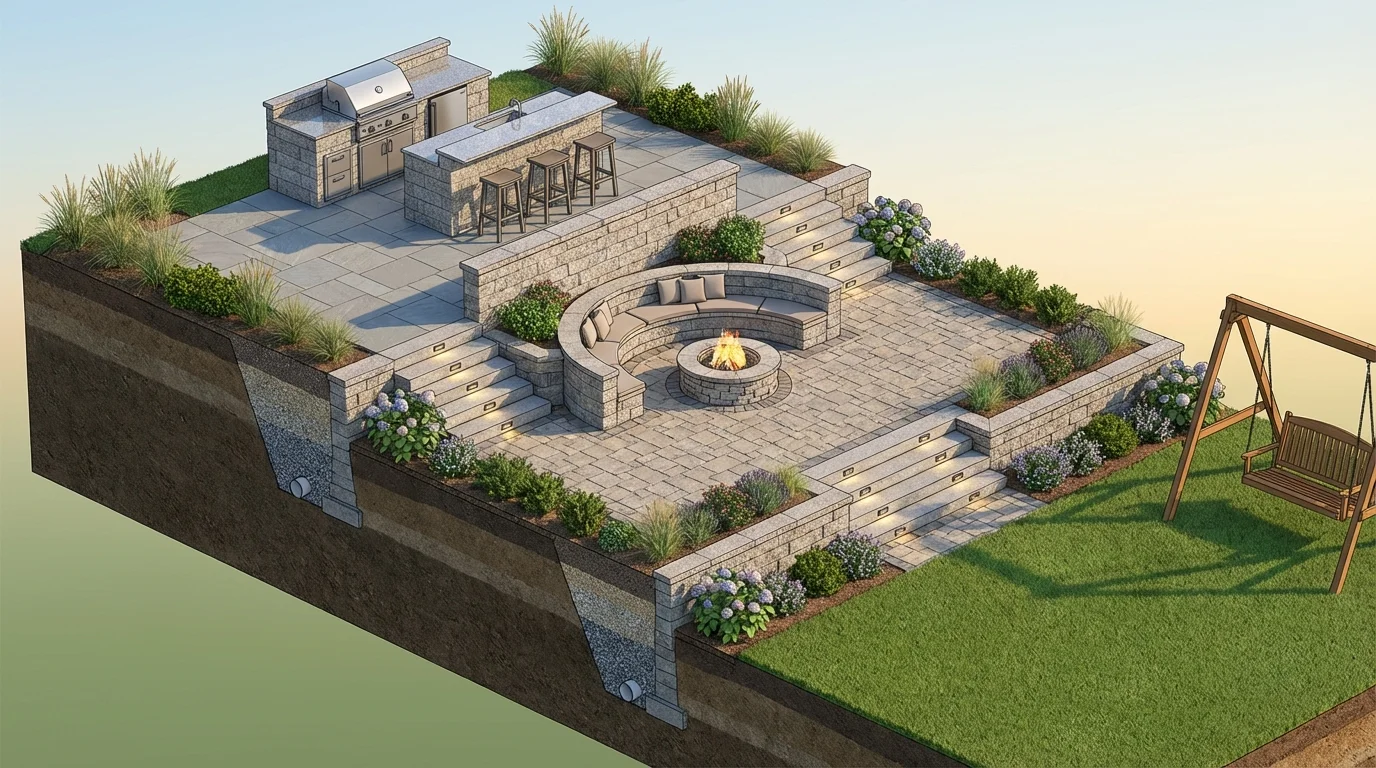
For Massachusetts homeowners with sloped yards along the New England coast, multi-level patios are a top 2025 trend, transforming challenging terrain into functional, stunning outdoor retreats. These designs work with the natural slope rather than against it, creating distinct zones for dining, lounging, and family play while enhancing coastal landscaping durability against freeze-thaw cycles and salty air[1][2][4]. In areas like Concord, Newton, or Attleboro, paver patios and natural stone patios—such as bluestone—dominate for their low-maintenance appeal and seamless integration with rugged shorelines[1][2].
A real-world example from Attleboro, MA, showcases Land Design Associates converting an unstable raised brick patio into a three-tier bluestone patio. The upper tier features a grill island and bar island for entertaining large groups, the middle a stone fire pit with veneer seating walls for cozy evenings, and the lower tier a flush lawn transition for safe child play—all without obstructive railings, preserving unobstructed lawn views[2]. Practical tips include pairing boulder retaining walls with native plantings like beach roses or bayberry to combat erosion and add seasonal texture, vital for Massachusetts landscape design in windy coastal spots[1][2].
Opt for permeable pavers in the upper levels to manage heavy rains, and incorporate landscape lighting along steps for safe evening access. Costs average $50–$100 per square foot, but tiered layouts maximize usable space without massive excavation, boosting property value by 10–15%[3][4]. Combine with coastal landscaping elements like driftwood accents or salt-tolerant grasses for that authentic New England vibe[1].
Real Massachusetts Examples and Inspirations
In Swampscott and Wakefield, multi-level patios with natural stone borders and concrete paver infill create high-end looks affordably, using retaining walls for step-down zones around fire pits[4]. Premier Paver Co. in Concord highlights terraced paver patios blending dining and lounging areas, enhanced by flagstone steps that evolve with fall foliage[1]. For walk-out basements common in coastal homes, align upper tiers with main floors and lower ones to basements, adding garden-level planters for herbs[3].
Practical Tips for Coastal Implementation
Prioritize drainage systems like drywells and trench drains to prevent basement flooding, as in the Attleboro project[2]. Select frost-resistant bluestone or granite pavers for longevity, and build in seating walls to soften transitions. Consult local pros for permits, ensuring designs meet New England building codes for slopes over 30%[1][2]. These multi-level patios not only solve uneven terrain but elevate your home's outdoor living for years[3][6].
Natural Stone and Paver Combinations Explained
For Massachusetts homeowners facing uneven terrain on the New England coasts, natural stone and paver combinations are a top 2025 patio trend that delivers timeless beauty, durability, and functionality. These designs blend rugged natural stone like bluestone or granite with textured pavers to create paver patios and natural stone patios that withstand harsh coastal conditions, including freeze-thaw cycles, salt spray, and high winds.[1][4] Unlike plain concrete slabs, this combo offers a high-end, organic look that integrates seamlessly with coastal landscaping, turning sloped yards into inviting multi-level retreats.[1][2]
The magic lies in strategic layering: use natural stone for borders, steps, or accents to frame cost-effective concrete pavers or textured varieties mimicking flagstone. This approach cuts costs while elevating aesthetics—perfect for Massachusetts landscape design on budgets.[1] On uneven terrain common in areas like Swampscott or the North Shore, combine these materials in multi-level patios with low retaining walls made of granite blocks supporting paver landings.[1][2] For example, a Peabody homeowner might feature a main bluestone-bordered paver patio for dining, stepping down to a peastone fire pit terrace edged in cleft bluestone, echoing coastal coves.[1][4] Practical tip: Opt for permeable pavers in the infill to manage coastal drainage, reducing runoff and complying with local regs.[2]
Real-world installs show these combos thriving in New England. In one North Shore project, textured pavers filled a granite-framed patio, paired with built-in stone benches for space-saving seating on a sloped lot.[1] South Shore designs in Easton use multi-level setups with paver mains transitioning to natural stone paths, creating zones for lounging and grilling.[2] Maintenance is low: Seal stones annually against salt, and choose frost-resistant materials to avoid cracking.[4] This trend not only boosts property value but enhances coastal landscaping by blending with native plants like Russian sage for a low-maintenance vibe.[4][5]
Benefits for Uneven Coastal Terrain
Multi-level patios transform challenging slopes into assets, using natural stone retaining walls (e.g., 2-3 feet high) to support paver tiers—ideal for Wakefield or Marblehead homes.[1][2] A real example: A Lynnfield yard with a 10-foot drop features bluestone steps linking paver dining and fire pit areas, adding usable space without excavation.[1] Tip: Integrate drainage channels with gravel behind walls to handle heavy rains.[2]
Design Tips and Combinations
Mix bluestone treads with gray pavers for subtle contrast, or granite curbs around tumbled pavers for a rugged coastal feel.[4] Pro tip: Source local Massachusetts quarries for authenticity and lower shipping—pair with native grasses for eco-friendly Massachusetts landscape design.[5] Total cost savings: 20-30% vs. all-stone by using pavers centrally.[1]
Integrating Built-In Seating and Lighting in 2025 Coastal Patios
For Massachusetts homeowners facing uneven terrain along the New England coast, integrating built-in seating and lighting into paver patios or natural stone patios transforms sloped yards into inviting, multi-functional outdoor retreats. This 2025 trend emphasizes seamless coastal landscaping and Massachusetts landscape design, where built-in stone benches and subtle illumination create cozy zones that withstand harsh freeze-thaw cycles and salty air[1][2]. Imagine a multi-level patio in Swampscott, with a lower paver patio for dining flowing into an elevated granite bench area around a fire pit—practical for entertaining while maximizing space in compact coastal lots[1]. Natural stone like bluestone or textured pavers forms durable bases, blending with native plants for low-maintenance appeal[1][4]. Practical tip: Pair built-in seating with integrated planters to soften edges and add privacy screening against coastal winds, as seen in Lynnfield designs where curved stone benches hug the patio perimeter[1]. Lighting elevates this further—smart lighting systems like low-voltage LEDs embedded in retaining walls or steps provide ambient glow, controllable via smartphone for evening gatherings[2]. In a real Marblehead project, recessed path lights along multi-level steps highlighted natural stone patio textures, extending usability into cooler nights while highlighting coastal landscaping features like dune grasses[1][2]. For uneven terrain, use tiered retaining walls to anchor seating, ensuring stability on slopes common in Wakefield or South Shore homes[1][2]. Budget-wise, combine concrete paver infill with natural stone borders for a high-end look under $20,000, per North Shore installs[1]. This integration not only boosts property value but fosters wellness-focused spaces, like a relaxed bench nook for morning coffee overlooking the Atlantic[2].
Designing for Uneven Terrain
Multi-level patios shine on coastal slopes, turning challenges into features with built-in seating at each tier[1][2]. In Easton examples, a main paver patio steps down to a fire-pit bench level, using granite caps for seating that doubles as walls—ideal for Massachusetts landscape design enduring winter snow[2]. Tip: Incorporate drainage channels in pavers to manage runoff, preventing erosion on uneven lots[1].
Lighting for Coastal Evenings
Integrated lighting in 2025 focuses on subtlety and tech, with smart systems syncing to dusk sensors for energy efficiency[2]. A Peabody homeowner's natural stone patio featured uplights on benches, casting dramatic shadows on textured surfaces while illuminating coastal landscaping paths safely[1]. Opt for marine-grade fixtures to resist salt corrosion, ensuring year-round reliability[2].
Budgeting Your Coastal New England Patio: DIY vs. Professional Installation
Creating a stunning paver patio or natural stone patio on your Massachusetts property requires careful planning, especially when dealing with the uneven terrain common in coastal New England. The decision between DIY installation and hiring professionals depends on your budget, timeline, and the complexity of your project. For homeowners with sloped yards—typical in areas like Swampscott and Wakefield—multi-level patios with retaining walls demand professional expertise to ensure proper drainage and structural integrity that withstands our harsh freeze-thaw cycles.[1]
The cost difference between DIY and professional installation can be substantial. A basic paver patio might cost $8-15 per square foot for materials alone, while professional installation adds $10-20 per square foot in labor. However, mistakes in grading, base preparation, or material selection can quickly exceed these savings. For natural stone patios using bluestone or granite, professional installation becomes even more critical—improper installation leads to settling, cracking, and costly repairs within a few years.[1]
Consider the scope of your project carefully. Simple, single-level patios on relatively flat terrain are more manageable for experienced DIYers. However, multi-level patios with built-in seating, retaining walls, and integrated drainage systems require professional-grade equipment and expertise.[2] Coastal properties face additional challenges: saltwater spray can degrade certain materials, and proper grading prevents water damage to your foundation.
When to Hire Professionals
For uneven terrain and complex designs, professional landscape design services pay for themselves through proper planning. Professionals understand local building codes, drainage requirements, and material selection for coastal environments. They also have access to equipment for excavation, compaction, and precise leveling that DIY tools cannot match.[1]
Budget-Friendly Hybrid Approach
Consider a middle ground: hire professionals for site preparation, grading, and base installation—the most critical steps—then handle finishing touches yourself. This approach reduces labor costs while ensuring structural soundness. Many Massachusetts contractors offer phased projects, allowing you to spread costs across multiple seasons while maintaining quality standards for your coastal landscaping investment.
Conclusion
As 2025 patio trends take shape along New England's coasts, homeowners are embracing natural stone pavers, multi-level designs, and built-in seating to create durable, stylish outdoor havens that withstand freeze-thaw cycles and salty air[1][2][4]. Integrated lighting, smart technology, and eco-friendly materials like bluestone or porcelain pavers elevate these spaces into seamless extensions of indoor living, perfect for coastal towns from Cape Cod to the North Shore[1][2][4]. Wellness-focused features, such as fire pits and native planters, maximize short summers while boosting property value through low-maintenance hardscaping[2][5]. Key takeaways include prioritizing textured, timeless materials for authenticity and blending coastal influences with modern modularity for versatile entertaining[3][4].
To bring these trends to your backyard, start by assessing your slope, sunlight, and lifestyle needs—then sketch a simple layout. Consult local experts for site-specific advice on drainage and wind resistance. Ready to transform your coastal patio? Contact Robert's Landscape for a personalized consultation and free quote.[1][2]
**
Frequently Asked Questions
What are the top 2025 patio materials for New England coastal homes?
Natural stone like bluestone and granite, along with textured pavers or porcelain alternatives, dominate trends for their durability against freeze-thaw cycles and coastal salt exposure. These mimic flagstone for a seamless blend with New England's landscape, offering low maintenance and timeless appeal over stamped concrete. Pair with concrete infill for cost savings[1][4].
How do multi-level patios work on sloped coastal yards?
Multi-level designs turn uneven terrain—common in areas like Swampscott or South Shore—into zoned spaces for dining, fire pits, and lounging, using retaining walls and steps. They enhance functionality on slopes, integrate covered areas like pergolas for extended use, and boost property value with thoughtful hardscaping tailored to New England weather[1][2].
Are smart features practical for coastal New England patios?
Yes, integrated lighting, smartphone-controlled systems, and automated irrigation are trending for seamless day-to-night transitions and low upkeep. In coastal climates, they pair well with weather-resistant setups like hot tubs or sound systems, promoting wellness while reducing maintenance—ideal for short outdoor seasons[2][4].
References
- Source from www.simplegreenslandscaping.com
- Source from goldmaplelandscaping.com
- Source from porchandpatio.net
- Source from www.shorelinepools.com
- Source from nehomemag.com
- Source from cataldolandscaping.com
- Source from www.veranda.com
- Source from modern-mill.com
- Source from www.premierpaverco.com
- Source from landdesignassociates.com