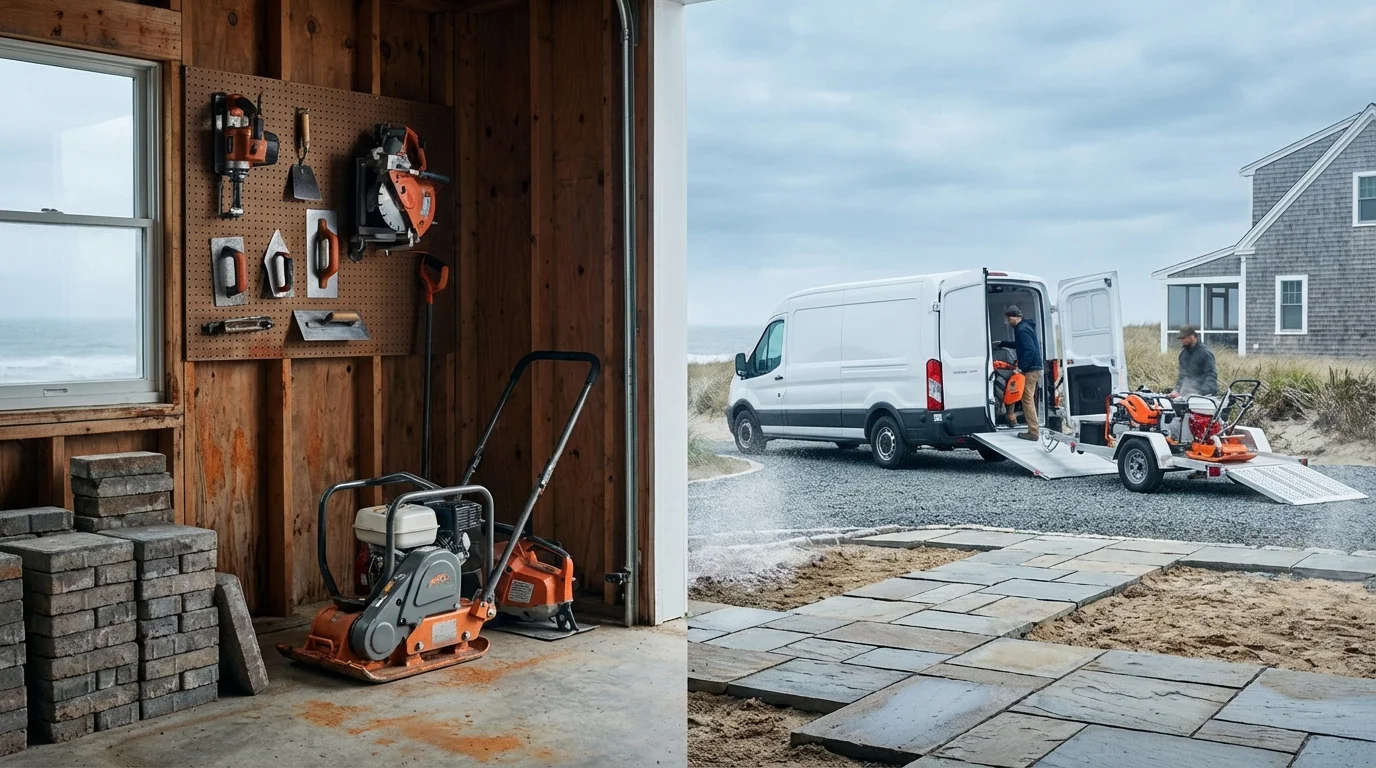
Budget Hardscaping: Tools vs. Rentals Debate
Dewalt or rent? Decode the best power tool strategy for your next coastal paver project without overspending.
Picture this: You're tackling a Cape Cod hardscape makeover, laying pavers for a windswept patio or walkway along Massachusetts' rugged coast. The salty air demands durable results, but your budget screams caution. Do you splurge on a DeWalt plate compactor or coastal landscaping power tools for your garage, or hit up a local spot like Lawrence Tool Rental for Massachusetts paver tool rentals? This tools vs. rentals debate hits home for DIYers and weekend warriors eyeing patio install tools and walkway power tools[2].
The problem? Ownership piles on hidden costs: upfront purchase (hundreds for pro-grade gear), plus maintenance, repairs, insurance, depreciation, and bulky storage—tough in compact New England homes where garages fight for space against beach gear[1][2][4]. Rentals dodge these, offering well-maintained, professional tools at a fraction of the price, ideal for seasonal coastal projects used less than once a month[1][2]. Follow the 50% rule: If annual rentals top half the buy price, owning might edge out—but for one-off jobs, renting saves big on delivery, fuel, and winter storage in our harsh climate[1][3].
In this post, you'll crunch real numbers with cost calculators, weigh buy scenarios for frequent Cape Cod hardscape tools users versus rent wins for casual builds, and get pro tips for sourcing gear near you. Walk away armed to choose smart, finish strong, and keep more cash for those ocean-view upgrades—without the regret.
Buy vs. Rent: Cost Analysis for Coastal Jobs
For coastal New England homeowners tackling Cape Cod hardscape tools buy decisions or Massachusetts paver tool rentals, the buy vs. rent debate hinges on usage frequency, hidden costs, and salty coastal conditions. Patio install tools like plate compactors or walkway power tools such as wet saws cost $500–$2,000 to buy but rent for $50–$150/day[1][2]. Renting shines for one-off coastal landscaping power tools jobs, avoiding storage in humid garages prone to rust from sea air, while buying pays off for frequent use like multiple patios over seasons[1][3].
Consider a real Cape Cod example: Installing a 400 sq ft bluestone patio requires a compactor ($800 buy vs. $75/day rent) and paver splitter ($600 buy vs. $60/day). For a single weekend project, renting totals ~$300 including delivery, beating a $1,400 purchase plus $200/year maintenance for corrosion protection[2][3]. But if you're a Hyannis homeowner doing annual walkway upgrades, buying spreads costs: at 10 uses/year, effective daily ownership drops to $20 after depreciation[1]. Factor coastal extras—insurance rises 20% for owned tools due to storm risks, and transport via sandy drives adds wear[3][4]. Use this rule: Rent if under monthly use; buy for weekly tasks[1]. Practical tip: Calculate total ownership (purchase + $1,500/season maintenance + $1,200 storage) vs. rentals ($1,500/month + delivery); for a $30K skid steer alternative like a mini excavator for Massachusetts retaining walls, ownership hits $8K/year vs. $18.5K renting[1][3].
One-Off Coastal Projects: Rent Wins
Short patio install tools jobs, like a Chatham seaside walkway, favor Massachusetts paver tool rentals at $100–$200/project. Avoid depreciation (20–30% yearly in salty air) and maintenance hassles—rental firms handle insurance and deliver to tight coastal lots[4][5]. Example: Rent a diamond saw for interlocking pavers ($80/day); total under $250 vs. $900 buy + rust-proofing[2].
Frequent Use: Buy for Long-Term Savings
DIYers in Plymouth refreshing Cape Cod hardscape yearly? Own coastal landscaping power tools—a $1,200 compactor costs $88/day owned (over 180 days/season) vs. $150+ renting, per detailed breakdowns[3]. Tip: Buy used from rental firms for 30% less, deducting fuel ($1,500/season) and labor[1][3]. Track via free calculators for your coastal specs[1][7].
Top Tools for Paver and Stone Work

When tackling Cape Cod hardscape tools buy decisions or weighing Massachusetts paver tool rentals for patio install tools and walkway power tools, focus on essentials that deliver precision and durability for coastal landscaping power tools in salty New England air. For DIYers building a 20x15-foot bluestone patio on Cape Cod, prioritize tools like the plate compactor, rubber mallet, masonry saw, paver extractors, and vacuum lifts—these handle sandy soils and freeze-thaw cycles effectively[1][3][4]. A plate compactor like the Tomahawk TPC80 with 5.5 HP Honda engine and 3,000+ lbs force is non-negotiable; it settles gravel bases in 2-4" lifts, preventing settlement in coastal winds[1][4]. Rent one for $75-100/day from local Massachusetts outfits, or buy for $1,500+ if doing multiple walkway power tools projects—ownership pays off after 5-7 rentals[4].
Rubber mallets or dead blow hammers gently tap pavers into place without chipping edges, ideal for irregular coastal stone like Hyannis fieldstone[1][4]. Pair with paver spacers and edge restraints from Pave Tool Innovators for uniform 1/8-inch joints, then sweep in polymeric sand to lock against tide-driven moisture[1][2]. For cutting, a masonry saw with diamond blade ensures clean cuts on granite curbing—dustless models keep coastal landscaping sites safe from silica exposure[4][5]. Paver extractors from A.M. Leonard simplify swaps; clamp into joints, lift a damaged 12x12 paver in seconds for repairs after winter storms[3][7]. Practical tip: For a Cape Cod patio install, screed sand bases with custom gravel screeds and string lines for level layouts—avoids pooling in heavy rains[1]. Ergonomic vacuum lifts like UniLyft reduce back strain on stone work, placing 50-lb pavers precisely without drops[2][5]. Buy mid-range kits ($300-800) for occasional use; they outlast cheap imports in humid conditions[2][3].
Must-Buy vs. Rent for Coastal Projects
Invest in hand tools like rubber mallets ($20) and paver extractors ($50-100)—they're lightweight, store easily, and see frequent use in Massachusetts paver tool rentals debates[1][3]. Power tools like plate compactors and masonry saws favor rentals ($50-150/day) unless you're a repeat hardscaper; SiteOne or Home Depot in Plymouth stock them seasonally[4][7]. Example: A Bourne homeowner saved $400 renting a compactor for a flagstone walkway versus buying, but owned extractors for endless tweaks[1][4]. Always use protective mats on compactors to avoid scuffing textured coastal pavers[4]. This mix balances budget hardscaping costs at $0.50-1.50/sq ft in tools alone[2].
Rust-Proofing for Salty New England Use
When working on hardscaping projects in coastal New England, salt exposure presents one of the most significant threats to both your tools and materials[1]. Road salt, sea spray, and de-icing chemicals create an aggressive environment that accelerates rust and corrosion on metal equipment. Whether you're buying tools outright or renting them for a patio installation or walkway project, understanding rust prevention is essential to protecting your investment and ensuring long-term functionality.
The decision between purchasing and renting hardscaping tools becomes more complex when you factor in rust-proofing requirements. Metal shovels, paver extractors, and screeding equipment all require protective measures in coastal Massachusetts and Cape Cod environments. If you're buying tools for occasional use, the cost of rust prevention treatments and storage solutions may outweigh rental expenses. However, rental companies typically maintain their equipment with protective coatings and proper storage, making rentals a practical choice for homeowners tackling single projects[1].
For those investing in quality hardscaping power tools, stainless steel or powder-coated finishes offer superior salt resistance compared to standard carbon steel. These premium options cost 20-40% more upfront but significantly extend tool lifespan in coastal conditions. After each use, especially when working with salt-treated materials or near ocean spray, rinse tools thoroughly with fresh water and dry completely before storage.
Storage and Maintenance Strategies
Proper storage is your first line of defense against rust. Keep tools in a dry, climate-controlled space rather than an unheated garage or shed where moisture accumulates. Apply a thin coat of machine oil or rust-preventative spray to metal surfaces before long-term storage. For rental equipment, verify that the rental company applies protective coatings—this detail often distinguishes quality rental services in New England from budget alternatives.
When to Rent vs. Buy
For homeowners planning a single driveway or patio project, renting paver tools and power equipment eliminates rust-proofing concerns entirely. Rental companies handle maintenance and replacement. However, if you're planning multiple hardscaping projects over several years, investing in rust-resistant tools becomes economically sensible despite higher initial costs.
ROI on Investments for Repeat Projects
When tackling repeat projects like annual patio installs or walkway refreshes in coastal New England, calculating ROI on Cape Cod hardscape tools buy versus Massachusetts paver tool rentals is key to maximizing your budget. For homeowners in humid, salty environments, tools like coastal landscaping power tools and walkway power tools face heavy wear from sand, moisture, and freeze-thaw cycles, making utilization rates critical[1][2]. Buying shines if you hit high usage—say, 80%+ over 6-8 months of the short New England season—but rentals often deliver better ROI by slashing maintenance, storage, and transport costs[1][3].
Consider a real example: You're a Cape Cod homeowner refreshing patios and walkways every spring for family gatherings. A paver saw or plate compactor costs $1,500-$3,000 to buy, but in Massachusetts' 6-8 month workable season, you'd amortize payments over active months only, pushing effective monthly costs from $500 to $750 if idle in winter[1]. Rentals at $100-$200/day from local spots like Lawrence Tool Rental let you pay just $800 for a 4-day patio install, with pros handling delivery to your rocky coastal site and pickup—no trailer needed amid narrow roads[2][3]. Over three repeat projects, buying might break even if perfectly utilized, but factor in salt corrosion repairs ($200/year) and storage in a damp garage, and rentals yield 20-30% higher ROI via zero upkeep[1][7].
Practical tip: Track your project's scale. For repeat projects under 10 days/year, rent professional-grade coastal landscaping power tools for superior power without depreciation hits[2]. If you're doing 20+ days, buy durable models rated for coastal use, like rust-resistant walkway power tools, but test via short-term rental first to confirm fit[4][6].
Short-Term Repeats: Rentals Maximize ROI
For seasonal repeat projects like biannual walkway edging in Massachusetts, Massachusetts paver tool rentals dominate ROI calculations. A $9,000 annual rental for a skid steer over three months beats buying's $20,000 first-year hit, especially with delivery freeing your driveway for winter plowing[4]. In coastal New England, avoid ownership's hidden costs: transport over dunes and compliance with emissions regs that sideline older buys[3]. Renting ensures better tools—newer, maintained models finish patio installs 30% faster, boosting your savings to reinvest in oyster-shell pavers[2][8].
Long-Term Repeats: When Buying Pays Off
If repeat projects span years, like ongoing Cape Cod hardscape maintenance, purchasing coastal landscaping power tools can edge out rentals. High utilization (north of 80%) over 8 months amortizes costs effectively, per industry formulas, especially for daily-use items like compactors[1][5]. Example: A landscaper buying a $6,500/month-financed tool for year-round tweaks saves versus $7,500 rentals, but only with steady bookings—test with a season-long lease first[1][4]. Tip: Deduct full rental fees yearly for bigger tax write-offs than depreciation[3].
Conclusion
In the tools vs. rentals debate for budget hardscaping in coastal New England, the choice hinges on usage frequency, project scale, and hidden costs like maintenance, storage, and depreciation. For DIY homeowners tackling seasonal projects—like installing patios or retaining walls amid salty air and freeze-thaw cycles—renting shines by slashing upfront costs, providing pro-grade gear (e.g., mini skid steers at $1,500/month vs. $30,000 purchase), and eliminating storage hassles in tight seaside lots[1][2][5]. Frequent pros? Buying compact tools like plate compactors pays off if used weekly, spreading costs over time (e.g., $8,000/year ownership vs. $18,500 renting)[1][3][6]. Use the 50% rule: if rentals exceed half the buy price annually, own it[1]. Key takeaway: calculate your needs with online tools, factoring New England winters that demand rust-resistant rentals. Next, audit your project—list tools, estimate hours, and compare quotes. Call-to-action: Visit a local rental like Lawrence Tool Rental for a free cost calc, or snag used gear from A-Z Rentals to kickstart your coastal hardscaping without breaking the bank[1][2].
Frequently Asked Questions
When should I buy tools instead of renting for hardscaping?
Buy if you'll use equipment more than once a month, like contractors on multiple coastal projects needing skid steers or compactors—ownership spreads costs (e.g., $8,000/year vs. $18,500 renting) and avoids repeat fees, but factor in maintenance, insurance, and salty air corrosion in New England[1][3][6].
What's the 50% rule for renting vs. buying equipment?
If total annual rental costs exceed 50% of the tool's purchase price, buying becomes smarter financially. For a $30,000 mini excavator, rentals over $15,000/year tip the scale—ideal for infrequent DIYers in coastal hardscaping to dodge this threshold[1].
Are rentals better for coastal New England homeowners doing hardscaping?
Yes, rentals suit most homeowners with limited space and seasonal use (e.g., tillers or aerators once yearly), saving on storage, upkeep, and accessing rust-resistant pro tools without loans. They deliver better results faster for patios or walls, per Lawrence Tool Rental insights[2][5].
References
- Source from www.a-zrentals.com
- Source from blog.lawrencetoolrental.com
- Source from www.lawnandlandscape.com
- Source from www.catrentalstore.com
- Source from www.youtube.com
- Source from lawnlevel.company
- Source from www.landscapemanagement.net
- Source from www.angi.com
- Source from howtohardscape.com
- Source from www.rentcoequipment.com