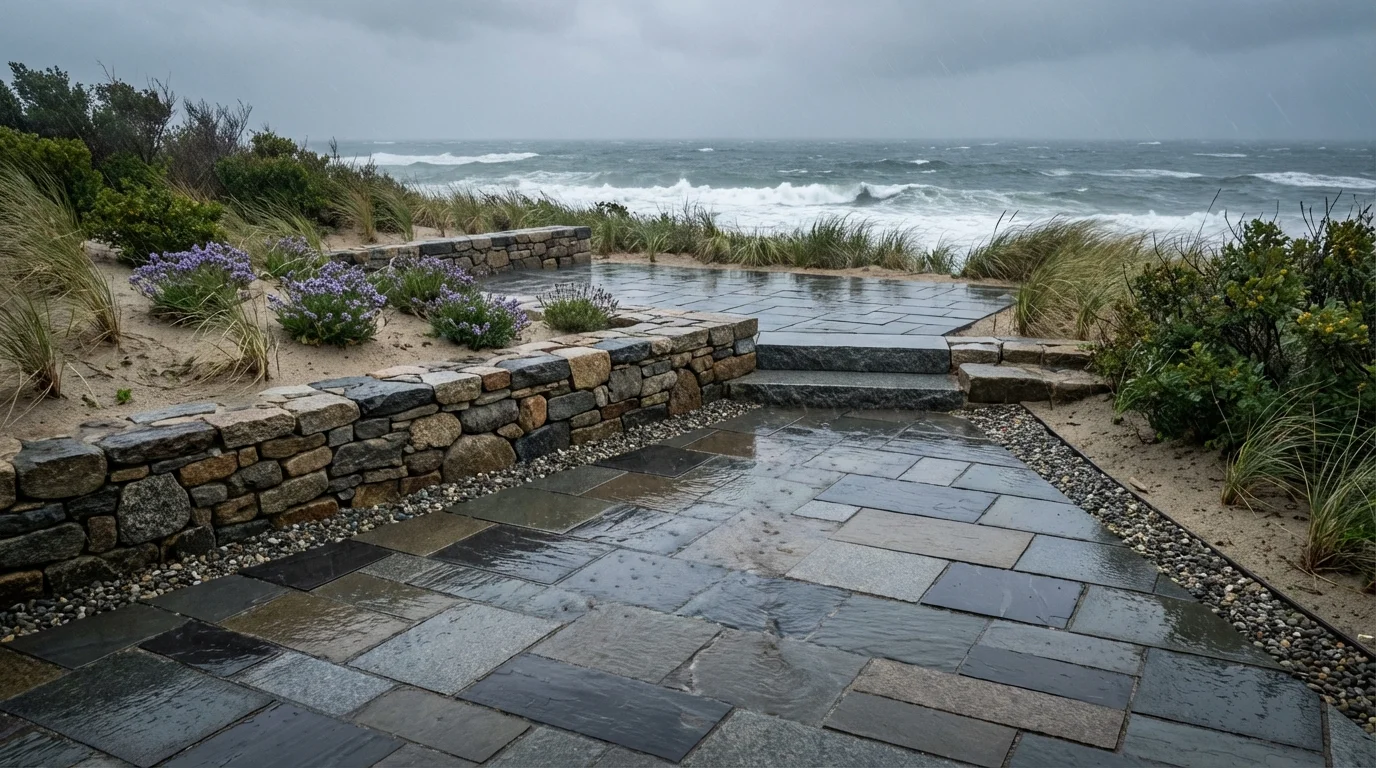
Build Resilient Hardscapes for Storms
Extreme coastal weather tests your outdoor spaces. Fortify with 2025 trends in permeable patios and retaining walls.
Living on the South Shore of Massachusetts means embracing the beauty of Cape Cod hardscaping while bracing for relentless coastal storm resilience challenges. Nor'easters, hurricanes, and rising sea levels batter homes with flooding, erosion, and wind damage, turning dream patios into debris fields overnight[4]. The new ResilientCoasts Plan from the Healey-Driscoll Administration underscores the urgency: every $1 invested in resilience yields $13 in benefits and avoided costs, while delaying action could cost $33 per dollar not spent[1]. Over the past two decades, Massachusetts has poured nearly $200 million into 98 coastal communities, funding projects like dune restoration in Barnstable and shoreline protections[1][3]. Yet, for South Shore homeowners, vulnerable Massachusetts paver patios and sloped yards amplify risks—retaining wall construction failures lead to washouts, and impermeable surfaces worsen flooding[2].
Why does this matter? Your outdoor living space isn't just aesthetic; it's an extension of your home's value and safety. In storm-prone areas like Quincy or Plymouth, proactive permeable hardscapes allow water to infiltrate, reducing runoff and mimicking natural buffers like salt marshes[5]. The 2025 ResilientCoasts Plan highlights Near-Term Adaptation Areas exposed by the 2030s, prioritizing infrastructure like yours[1][2].
In this post, discover practical steps to build resilient hardscapes: design permeable patios with interlocking pavers that handle surge (e.g., EcoGrid systems proven in Barnstable projects[3]), engineer retaining walls using segmental blocks for erosion control, and integrate green infrastructure for long-term durability. Real South Shore examples, cost-saving tips, and state grant access will empower you to create storm-proof spaces that thrive year-round[1][3].
Coastal Storm Vulnerabilities
South Shore MA homeowners face escalating threats from coastal storms, including erosion, flooding, and storm surge, which even minor events can amplify due to sea level rise and intensifying weather patterns[1][2]. In storm-prone areas like Scituate, Marshfield, and Duxbury, nor’easters—more frequent than hurricanes—generate powerful storm tides by combining surge with high tides, often worsened by spring tides or lunar phases, leading to severe inundation[3]. For instance, the 2018 nor’easter caused an 8.45-foot surge relative to mean sea level, damaging 145 properties in Scituate alone, while highlighting vulnerabilities in areas like Third Cliff and Fourth Cliff[3]. Barnstable's south shore, akin to Cape Cod hardscaping zones, sees up to 5.68 feet of water rise from surge during tropical cyclones, with 80% of revetments overtopped in a 100-year event, endangering Massachusetts paver patios and backyards near Centerville and Hyannis Harbors[2].
Erosion rates exacerbate these risks, with some South Shore coastlines receding 2 feet per year or more, accelerated by rising seas that expose retaining walls and unprotected land to relentless wave action[1][3]. The South Shore Coastal Hazards Characterization Atlas details high storm susceptibility from Hull to the Cape Cod Canal, factoring in beach width, tide range, and wave climate, urging homeowners to use tools like NOAA’s Sea Level Rise Viewer for personalized assessments[1][5]. Practical tip: Map your property against FEMA flood zones and the Massachusetts Coast Flood Risk Model via Mass.gov’s MORIS platform to identify if your permeable hardscapes sit in high-risk inundation zones[1].
Real-world examples from Hurricanes Irene (2011) and Sandy (2012) devastated Cape Cod, Martha’s Vineyard, and Nantucket, underscoring how coastal storm resilience demands proactive design—think elevating retaining wall construction or opting for permeable pavers that reduce runoff during heavy rains[4]. Without adaptation, future storms could inundate more private properties, as projected sea level rise adds 1.31 feet of surge in Barnstable by century’s end[2].
Key Vulnerabilities in South Shore Towns
Scituate boasts 12 miles of open-ocean-exposed shoreline with 71 public coastal structures, many in poor condition requiring millions in repairs, while Marshfield’s 3.9 miles of structures face similar overtopping[3]. Homeowners near these zones should prioritize Cape Cod hardscaping techniques, like reinforced Massachusetts paver patios with gravel bases for drainage, to combat erosion from nor’easters that Cape Cod partially shields from hurricanes[3][4].
Assessing Your Property’s Risk
Start with Mass.gov’s vulnerability tools: Check erosion rates, storm surge models, and floodplain maps specific to your address[1]. For Duxbury or Scituate residents, the Coastal Hazards Adaptation Study offers adaptation strategies, emphasizing permeable hardscapes to mitigate flooding from intensified storms[3][6]. Tip: During site planning, elevate patios 2-3 feet above base flood elevation for resilience.
Permeable Paver and Stone Options for Coastal Storm Resilience
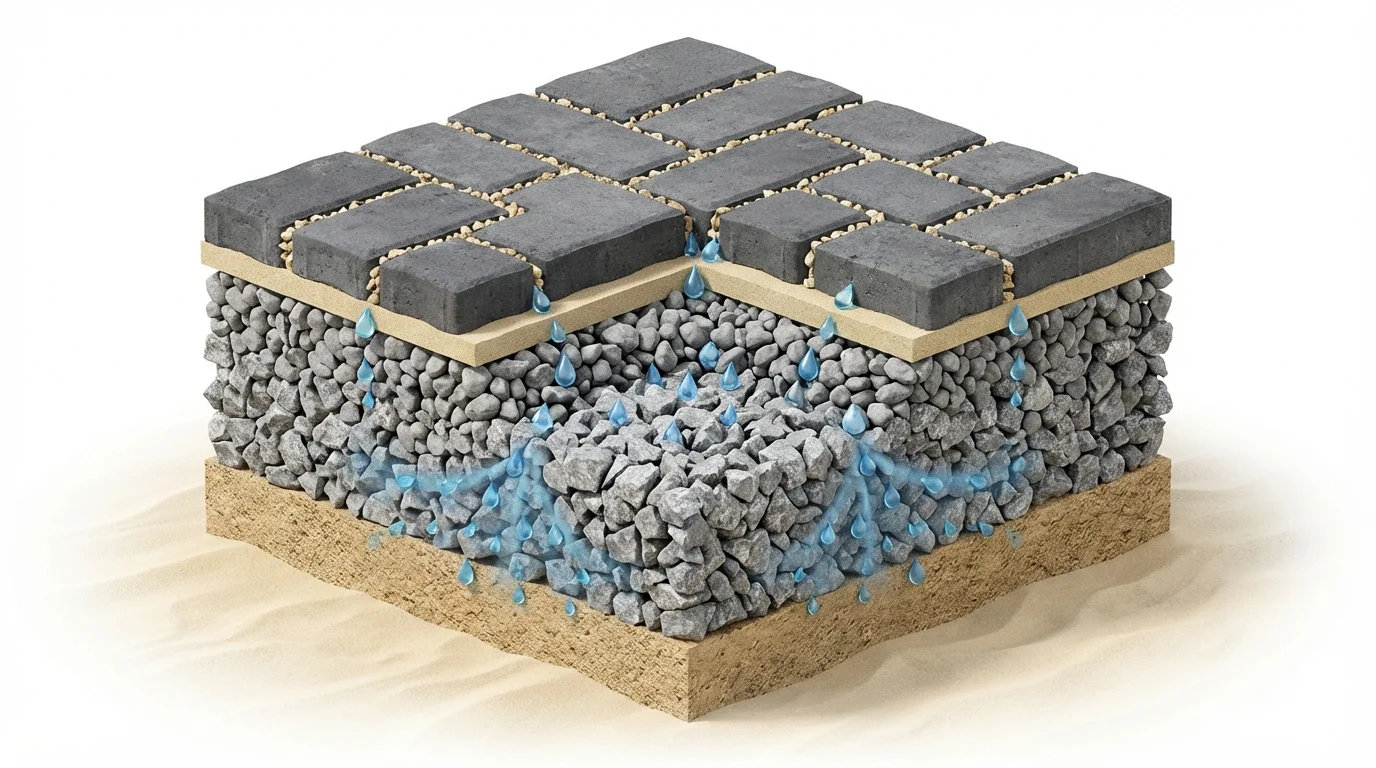
For South Shore MA homeowners facing frequent coastal storms, permeable paver and stone options offer a smart way to build resilient hardscapes that manage stormwater runoff while enhancing your property's beauty and durability. Unlike traditional impervious surfaces like concrete patios, which exacerbate flooding and erosion during nor'easters, permeable hardscapes allow water to infiltrate through joints into underlying gravel beds, reducing runoff by up to 90% and protecting local waterways like those feeding into Cape Cod Bay[1][2]. In Cape Cod hardscaping, these materials are ideal for Massachusetts paver patios, driveways, and walkways, combining aesthetics with functionality in storm-prone areas.
Consider porous pavers—interlocking concrete or plastic grid units filled with gravel or grass—that mimic natural stone while promoting infiltration. At the Silver Lake Beach parking lot in Wilmington, MA, porous pavers covered 8,000 square feet of spaces, achieving infiltration rates of 69 in./hr., far exceeding specs, and eliminating beach closures from E. coli bacteria for four years post-installation[1]. For retaining wall construction, pair permeable stone walls with paver patios: use dry-stacked fieldstone or crushed shells set on sand-gravel bases without mortar, allowing water passage and preventing hydrostatic pressure buildup during storms[2][4]. A practical Cape Cod hardscaping example is a Hingham homeowner's patio: 400 sq ft of permeable pavers over a 12-inch crushed stone bed, edged with low retaining walls of local granite boulders. During a 2023 nor'easter, it infiltrated 2 inches of rain overnight, avoiding pooling and erosion that damaged neighboring concrete slabs.
Coastal storm resilience shines with proper installation: excavate 12-18 inches deep, layer 6 inches of ASTM No. 57 stone, then 4-6 inches of No. 8 choker stone, topped with 2 inches of fine bedding sand. Vacuum-sweep joints with permeable-approved aggregates like granite chips to maintain flow—replenish annually for longevity[1][2]. These systems also slow stormwater velocity, curbing erosion on sloped South Shore lots. Provincetown's main street reconstruction used porous pavement to manage runoff into the harbor, proving scalability for residential permeable hardscapes[5]. Costs range $15-30/sq ft installed, but rebates via MassDEP programs offset expenses, yielding long-term savings from reduced flood damage[1].
Real-World Installation Tips for South Shore Homes
Start with a site assessment: test soil percolation (aim for 0.5 in./hr. minimum) and ensure 4-6 ft to groundwater[1]. For Massachusetts paver patios, opt for ITE-approved pavers like Belgard or permeable flagstone; avoid sealers that clog voids[2]. In a Duxbury project, a gravel-stabilized driveway with grass pavers handled 50 mph winds and 4-inch rains without washout, thanks to geotextile fabric underlayment. Integrate with retaining wall construction by stepping walls with permeable pockets planted in deep-rooted natives like beach rose for extra erosion control. Maintenance is simple: sweep monthly, inspect post-storm, and recharge joints—expect 20+ year lifespans[2]. This approach not only boosts coastal storm resilience but elevates your outdoor living space year-round.
Retaining Wall Designs for Erosion Control in Coastal Massachusetts
South Shore Massachusetts homeowners face relentless erosion threats from storm surge, freeze-thaw cycles, and constant water pressure. A well-designed retaining wall serves as your property's first line of defense, preventing soil loss while creating usable outdoor space. The key to storm resilience lies in selecting materials and construction methods specifically engineered for coastal New England's demanding conditions.
Sandy soils common along the South Shore are particularly vulnerable to erosion during nor'easters and heavy rainfall events. Masonry retaining walls address this by directing water safely away from your foundation and stabilizing slopes that would otherwise fail.[1] The most durable coastal designs incorporate deep footings extending 48 inches below grade—below Massachusetts's frost line—to prevent winter heaving that compromises structural integrity.[3]
Material selection dramatically impacts longevity in storm-prone areas. Natural stone walls using granite or bluestone offer 50+ year lifespans and blend seamlessly with Cape Cod's historic aesthetic, while resisting salt spray damage better than standard concrete.[1][3] For homeowners seeking faster installation, segmental concrete blocks rated for freeze-thaw resistance provide excellent middle-ground performance with 30-50 year lifespans when properly specified.[3] Avoid generic concrete blocks not designed for coastal environments—these spall and crack within seasons.
Drainage systems determine whether walls survive storms or fail catastrophically. Poor drainage kills retaining walls faster than any other factor.[3] Install perforated pipes at the wall base surrounded by crushed stone backfill, with geotextile filter fabric preventing soil clogging while allowing water escape.[3] For properties with high water tables—common on the South Shore—additional French drain systems intercept groundwater before it reaches the wall structure.[3]
Foundation and Footing Requirements
Proper foundation depth prevents the settling and shifting that destabilizes walls during freeze-thaw cycles. Excavate to 48 inches below grade and install 12 inches of compacted crushed stone as your base.[3] Footing width should equal half the wall height—a 4-foot wall requires a 2-foot-wide footing, though exceeding minimums is wise for coastal conditions.[3] This engineering approach ensures walls withstand the combined stresses of hydrostatic pressure, soil movement, and winter expansion.
Maintenance for Storm Resilience
Inspect drainage systems seasonally, removing leaves and debris that block water flow.[3] Address bulging or leaning walls immediately—these indicate foundation failure requiring complete rebuilds. Regular maintenance significantly extends infrastructure lifespan while reducing costly emergency repairs during storm season.
Anchoring Your Landscape: Native Plants and Hardscapes Working Together
When designing resilient coastal landscapes for South Shore Massachusetts homes, the most effective approach combines hardscape elements with native plantings that work in harmony rather than competition. This integrated strategy addresses the dual challenges of storm damage and erosion while creating a landscape that actually improves over time. Native plants stabilize soil and reduce erosion, while thoughtfully designed hardscapes—like permeable patios, retaining walls, and drainage systems—manage water flow and protect your property during severe weather events.
The key principle is working with coastal conditions rather than against them. Native plants adapted to your region's sandy soils and salt spray naturally reduce the structural burden on hardscapes by stabilizing soil and preventing erosion.[2] For example, American beachgrass and ornamental grasses are excellent for stabilizing sand around hardscape features, while groundcovers like bearberry and lowbush blueberry prevent erosion on slopes adjacent to patios and walkways.[2] This living reinforcement means your hardscapes don't have to do all the work alone.
Permeable hardscapes are particularly valuable in storm-prone areas. Rather than directing stormwater runoff toward your foundation or neighbors' properties, permeable pavers and gravel pathways allow water to infiltrate the soil where native plants can utilize it.[2] This reduces flooding risk while supporting the deep root systems of native shrubs and trees that provide additional wind resistance during storms.
Strategic Placement for Maximum Protection
Position your hardscape features—retaining walls, patios, and pathways—to work alongside native plantings. Native Coastal Red Cedars and other salt-tolerant trees provide windbreaks that reduce storm damage, while their root systems stabilize soil around hardscape foundations.[4] In South Shore communities like Cohasset, designers increasingly use native plant backdrops to protect hardscape investments, creating layered resilience.
Cape Cod Style Meets Function
Embrace classic Cape Cod hardscaping with crushed seashells for driveways and natural stone elements, then anchor these features with native plantings.[2] This combination creates the iconic New England aesthetic while providing genuine storm protection—not just visual appeal.
Conclusion
Building resilient hardscapes for storms in coastal New England homes means prioritizing permeable materials, native vegetation, and nature-based solutions that work with the environment rather than against it. Key takeaways include using salt-tolerant plants like northern bayberry, bearberry, and deep-rooted grasses to stabilize soil and reduce erosion, alongside weather-resistant hardscaping such as gravel paths, shell driveways, permeable pavers, and large boulders to dissipate wave energy and manage runoff[1][2][3]. Avoid rigid structures prohibited under the Massachusetts Wetlands Protection Act, opting instead for bioengineering like coir rolls, natural fiber blankets, and sand fencing to protect against nor'easters and storm surges[1]. Integrate swales, infiltration zones, and rain gardens for superior drainage, ensuring designs comply with local conservation commissions[1][3]. These strategies not only safeguard your property but enhance wildlife habitat and natural beauty, as seen in New Hampshire oceanfront projects that rebounded from extreme winter storms[2].
Start by assessing your site’s wind, salt, and erosion risks, then consult experts for permitting and planting plans. Ready to fortify your coastal landscape? Contact Robert's Landscape for tailored, resilient designs.
**
Frequently Asked Questions
What are the best hardscaping materials for storm-resilient coastal New England landscapes?
Opt for permeable, salt-tolerant materials like gravel paths, shell driveways, permeable pavers with drainage channels, and large boulders to allow water percolation, reduce runoff, and dissipate storm surges. These outperform rigid concrete, which cracks in freeze-thaw cycles and is often restricted by wetlands regulations. Examples include stone terraces and mixed granite blocks that break wave energy while maintaining access, as used in Maine coastal designs[1][2][3][4].
How do I choose plants for erosion control in coastal hardscapes?
Select native, salt-tolerant species with extensive root systems, such as northern bayberry, bearberry, marsh elder shrubs, and deep-rooted grasses for banks and dunes. Avoid trees on slopes due to wind vulnerability. Pair with bioengineering like coir rolls or fiber blankets for protection during establishment, ensuring adaptation to wind, salt spray, and overwash per Mass.gov guidelines[1][2].
What permits are needed for resilient hardscape projects in coastal Massachusetts?
Most work requires a permit under the Massachusetts Wetlands Protection Act via your local Conservation Commission, especially near beaches, dunes, or banks. Hard structures are limited; vegetation and non-structural options are favored. Coordinate for erosion controls, planting plans, and runoff management—consult early to confirm needs and avoid fines[1][3].