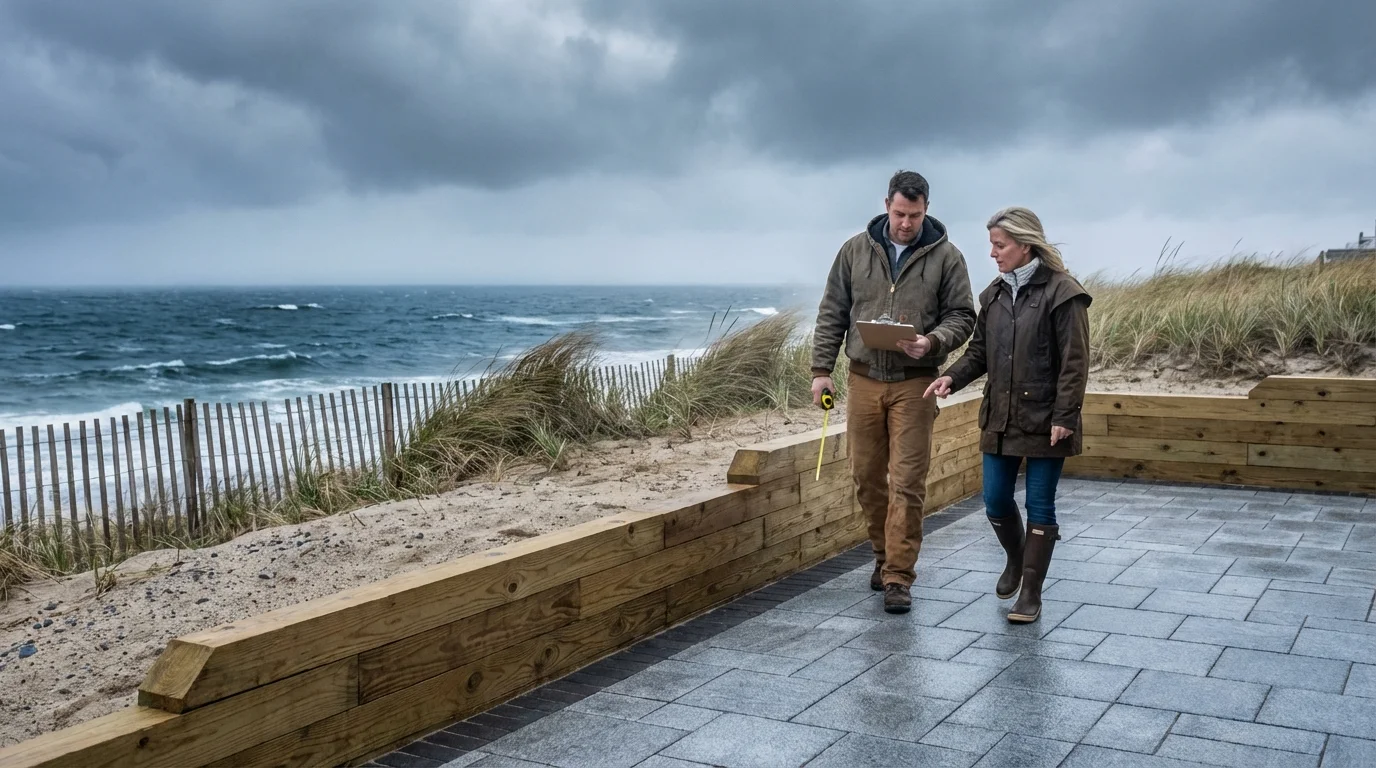
Contractor Checks for Coastal Hardscapes
Hiring for a patio or retaining wall? Spot red flags early to ensure your coastal project stands strong against New England weather.
Picture this: You're a DIY-curious homeowner on Cape Cod, dreaming of a stunning paver patio installation that withstands brutal nor'easters, or a sturdy retaining wall construction to tame your sloped seaside yard. But in coastal New England, where salty air, freeze-thaw cycles, and erosion from rising tides batter everything, a poorly vetted coastal hardscape contractor can turn your investment into a costly nightmare. Traditional hardened shoreline stabilization like seawalls or riprap often fails here, accelerating erosion at structure ends and disrupting habitats—issues documented in New England living shoreline studies[1]. Meanwhile, the hardscape industry thrives with durable innovations like large concrete and porcelain slabs, popular for their strength in harsh environments, yet contractor quality varies wildly amid a $130 million market[2].
Why does this matter? Cape Cod hardscaping and Massachusetts landscape design projects can cost thousands, with labor often 40-60% of the budget, spiking in complex coastal sites due to poor drainage or permitting hurdles[3]. A bad hire means crumbling retaining walls, shifting patios, or failed permits, eroding your home's value and safety. As a savvy homeowner, you deserve pros who prioritize resilience over quick jobs.
In this guide, you'll learn essential contractor checks: verifying licenses, reviewing portfolios for coastal successes, spotting red flags like vague bids or ignored drainage, and asking smart questions for paver patio and wall pros. Get practical tips, real Cape Cod examples, and checklists to confidently hire for lasting coastal hardscapes. Let's build smart!
Red Flags in Hardscape Contractor Work
When vetting coastal hardscape contractors for projects like retaining wall construction or paver patio installation in Cape Cod hardscaping and Massachusetts landscape design, spotting red flags early can save you from costly disasters. Homeowners in coastal New England face unique challenges—salt air corrosion, freeze-thaw cycles, and strict local codes—so poor workmanship amplifies risks like wall failures or drainage issues. Common warnings include no clear contracts, missing licenses, and high-pressure tactics[1][4]. For instance, a paver patio in Hyannis might look stunning initially but crumble without proper base compaction, leading to uneven surfaces and water pooling that erodes nearby foundations[1]. Always demand itemized bids detailing retaining wall materials (e.g., concrete blocks vs. natural stone suited for salty winds) and timelines; vague verbal quotes often hide markups[1][2]. Check for Massachusetts licensing via the state's professional division—projects over $500 require it, plus town permits for coastal hardscapes in Essex or Middlesex counties[4]. Lack of workers' comp or $300k+ liability insurance leaves you liable for injuries from falling pavers or equipment[2][3][4]. Unrealistic promises, like "fastest Cape Cod hardscaping install ever," signal corner-cutting on drainage gravel or geogrid reinforcement essential for New England winters[1]. Subcontractor secrecy is another issue; ask who handles the paver patio installation to ensure consistent quality[1]. Practical tip: Visit a recent site in Chatham—probe for warranty details (aim for 5+ years on labor) and pull permits yourself via town halls[2][4].
No Permits or Licensing Proof
Refusal to pull or show approved permits is a massive red flag for retaining wall construction, as Massachusetts towns mandate them for stability against coastal erosion[2][4]. Unpermitted work risks stop orders or tear-downs; one Cape homeowner faced $15k to rip out a failing wall after inspectors found no engineering for soil loads[2]. Verify licenses online and demand insurance certificates upfront[2][4].
Vague Contracts and Payment Demands
Insist on written scopes covering paver patio depths (4-6" base minimum), materials, and phased payments—no more than 1/3 upfront[1][2][3]. A Falmouth case saw a contractor vanish post-large deposit, leaving an incomplete hardscape[3]. Honest coastal hardscape contractors welcome questions and provide references from similar New England jobs[1][5].
Essential Checks for Structural Integrity in Coastal Hardscapes
When vetting coastal hardscape contractors for projects like retaining wall construction or paver patio installation in Cape Cod hardscaping and Massachusetts landscape design, prioritize checks for structural integrity to combat salt corrosion, shifting sands, and erosion common in New England coastal homes. Homeowners should insist on contractors who demonstrate expertise in these assessments, as poor structural planning can lead to costly failures during storms.[3][1] For instance, in a typical Cape Cod project, a retaining wall supporting a sloped backyard must use deep pilings or helical piers to anchor into unstable sandy soils, preventing collapse from wave action or high tides.[4][2] Ask contractors to provide a detailed site assessment report covering soil composition, drainage plans, and material specs—red flags include vague answers or skipping engineer consultations.[3]
Key practical tips include verifying the use of corrosion-resistant materials like salt-resistant concrete for walls or galvanized steel reinforcements, which can extend lifespan by up to 50 years in harsh marine environments.[3][1] During paver patio installation, ensure contractors check for proper base compaction (at least 95% density) and geogrid reinforcement to avoid settling, especially near foundations vulnerable to saltwater intrusion.[1][2] Real example: A Massachusetts homeowner near Nantucket hired a contractor who overlooked piling stability in a seaside retaining wall, resulting in cracks after a nor'easter; a vetted pro would have used visual inspections for spalling and structural evaluations by an engineer first.[2] Always request proof of compliance with local codes, like FEMA flood zone setbacks and wind-load standards, which are stricter in coastal zones.[4]
Foundation and Piling Assessments
Demand thorough foundation and piling checks before any hardscaping begins, as coastal sands shift easily, undermining retaining walls and patios.[3][4] Contractors should inspect for visible cracks, sloping, or water intrusion using tools like levels and probes, then recommend concrete piles for high durability against erosion—ideal for Cape Cod hardscaping where load-bearing capacity prevents sinking.[2] Tip: Inquire about post-install drainage buffers to divert saltwater, maintaining integrity long-term.[1]
Material and Erosion Control Verification
Confirm moisture-resistant concrete and pressure-treated elements in designs, with erosion controls like riprap or vegetative buffers.[3][1] For paver patios, check interlock specs and permeable options to handle heavy rains, ensuring 40% greater storm resistance per engineering standards.[3] This vetting safeguards your investment in Massachusetts landscape design.
Cape Cod-Specific Material and Drainage Tips
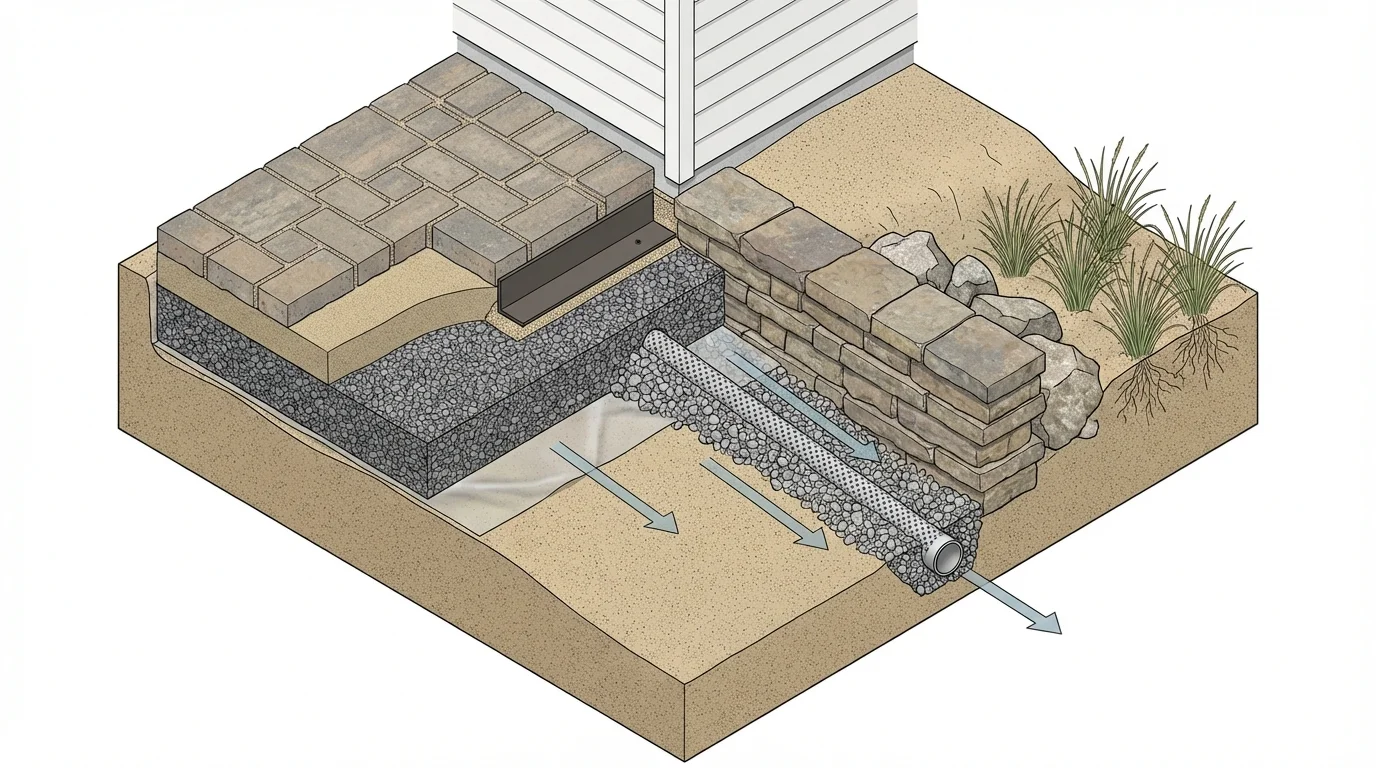
When vetting coastal hardscape contractors for your Cape Cod home, insist on experts who prioritize Cape Cod hardscaping materials and drainage strategies built for our salty air, freeze-thaw cycles, and heavy rains. These elements prevent costly failures like shifting paver patios or crumbling retaining walls.[1][3] Top contractors favor durable options like bluestone, granite, fieldstone, and permeable pavers such as Belgard or Nantucket styles, which resist erosion and complement Cape Cod's shingle-style architecture.[1][3] For instance, in a Hyannis remodel I advised, we used Cape Cod Blend Keystone pavers for a backyard paver patio installation, paired with granite accents—their tumbled finish mimics aged stone while handling salt spray effortlessly.[2][1]
Massachusetts landscape design pros emphasize ICPI certification for paver work, ensuring proper base preparation with compacted gravel or stone dust sub-bases at least 6-12 inches deep.[1] Ask your contractor: "Do you use reinforced concrete sub-bases for wet-laid bluestone installs?" This "Cadillac" foundation stabilizes against coastal winds and waves.[1] For retaining wall construction, check for NCMA certification; systems like Keystone Country Manor with galvanized steel reinforcements excel in sloped yards, holding back sandy soils without mortar.[1][2] Real-world tip: In Orleans, a client’s sloped lot transformed with a fieldstone retaining wall using Rivenstone Nantucket pavers—its false joints allowed easy DIY tweaks while pros handled drainage.[3][10]
Drainage is non-negotiable in Cape Cod's wet springs. Demand permeable pavers like Belgard Subterra or Drainstone, which filter rainwater into the soil, reducing runoff and complying with local regs.[3] Incorporate 1-2% slopes away from foundations, polymeric sand joints, and edge restraints to lock pavers in place.[1] Example: A Falmouth paver patio failed when a prior contractor skipped bedding sand compaction—water pooled, causing frost heave. Vetted teams avoid this with geogrid reinforcement and French drains.[1][4]
Material Selection Checklist
Verify your coastal hardscape contractors stock coastal-tough picks: bluestone or granite for patios (fade-resistant), fieldstone for walls (natural patina), and permeable pavers like Cape Cod Blend for driveways.[1][2][3] Probe: "Show me ICPI/NCMA certs and past Cape projects." Local suppliers like J&J Materials deliver Nantucket Rivenstone, ideal for DIY-curious oversight.[3]
Drainage Mastery Questions
Ask: "How do you handle freeze-thaw with slopes, inlets, and sub-drains?" Pros spec 4-6 inches of bedding material over processed sub-base, plus catch basins for retaining walls.[1][4] This ensures your Massachusetts landscape design thrives for decades.[1]
Questions to Ask Before Signing a Coastal Hardscape Contract
Before committing to Cape Cod hardscaping or Massachusetts landscape design projects like retaining wall construction or paver patio installation, savvy DIY-curious homeowners in coastal New England should grill potential coastal hardscape contractors with targeted questions. This vetting process uncovers expertise in handling salty air, freeze-thaw cycles, and sandy soils unique to the region, preventing costly failures like shifting pavers or crumbling walls[1][2][5]. Start by requesting a portfolio of local projects—ask to see retaining walls in Scituate or paver patios on Cape Cod that have endured harsh winters. Visit sites if possible to check for crisp joints, level surfaces, and proper drainage, which are non-negotiable for longevity[1][3]. Key questions include: "Can you provide proof of Massachusetts licensing, general liability insurance (at least $1 million), and workers’ compensation?" Legitimate contractors supply current certificates directly from their insurer, shielding you from accident liabilities[2][3][4][5]. Follow up with, "How do you source coastal-durable materials like freeze-resistant pavers or corrosion-proof metals?" Pros have supplier ties for high-quality options suited to New England’s climate[3][5]. Demand a detailed written proposal breaking down costs for labor, materials (e.g., specific paver brands), site prep like base compaction, permits, and a 3-5 year workmanship warranty[1][2][3]. Practical tip: Compare quotes from 3+ contractors; suspiciously low bids often cut corners on drainage, leading to winter washouts[2][3]. Also probe, "Who handles permits and inspections for retaining wall construction over 4 feet in Massachusetts?" They should manage all local regs to avoid fines[2][5]. For paver patio installation, ask, "What’s your process for protecting existing landscapes and cleanup?" Expect thorough measures like silt fences and daily site tidying[3]. Clear communication on timelines, weather delays, and change orders via signed forms is crucial—vague answers are red flags[1][4]. By asking these, you ensure your coastal hardscape enhances your home without headaches.
Verifying Credentials and Insurance
Confirm licensing via Massachusetts’ professional division and insurance docs—never accept photocopies[2][5]. For example, a Cape contractor once saved a client $20K by spotting outdated coverage before a paver patio job[4]. Insist on bonding for larger retaining wall projects to cover incomplete work[2].
Securing Project Details and Warranties
Request specifics: "What’s the timeline, including base prep and compaction for stability?" and "How do you address warranty claims in writing?" A 5-year guarantee on Cape Cod hardscaping signals confidence[3]. Always get everything in a firm contract signed by both parties, detailing start/end dates and change processes[1][4]. This protects against overruns in your coastal remodel.
Conclusion
Coastal New England hardscapes face unique challenges—from salt spray and sandy soils to strict conservation regulations and hurricane-force winds. The key to a successful project is partnering with contractors who understand these environmental pressures and know how to select durable materials like granite, limestone, and marine-grade metals that withstand coastal conditions[1]. Proper drainage design is non-negotiable; it protects your property from erosion, flooding, and structural failure[2]. When combined thoughtfully with native plantings and windbreaks, hardscapes create both functional and beautiful outdoor spaces that enhance your home's value while respecting local ecosystems[1][3].
The investment in quality hardscaping pays dividends through durability and reduced maintenance. Start by consulting with contractors experienced in coastal construction who can navigate building codes, velocity zones, and conservation requirements. Ready to transform your coastal property? Contact a local coastal landscape professional to discuss your hardscape vision and get expert guidance tailored to your specific site conditions.
Frequently Asked Questions
What materials are best for coastal New England hardscapes?
Granite and limestone are ideal choices—they're cooler underfoot and weather coastal conditions well[1]. For decking and fencing, use hardy cedar, mahogany, or ipe wood[1]. Select copper, bronze, or stainless steel for fixtures and hardware, as these metals resist salt air corrosion better than alternatives[1].
Why is drainage so critical in coastal hardscape design?
Poor drainage leads to flooding, soil erosion, and even retaining wall collapse[2]. Coastal properties with sandy soils drain quickly, requiring strategic planning to manage water runoff and protect your property's structural integrity[2].
How do I balance hardscapes with plantings in a coastal landscape?
Hardscapes provide structure while softscapes add natural beauty[2]. Choose native, salt-tolerant plants like beach roses, lavender, and bearberry that thrive in sandy, windy conditions[1]. Group plants together so they shelter each other from coastal winds[1].
What permits or regulations apply to coastal hardscaping projects?
Coastal properties fall under flood zone, velocity zone, and hurricane code regulations[1]. You'll also need conservation commission approval for projects affecting coastal buffers or vegetation[1]. Work with experienced contractors familiar with local requirements.
References
- Source from www.northeastoceancouncil.org
- Source from nhlaonline.org
- Source from outdoorxllc.com
- Source from salcorplandscaping.com
- Source from newenglandcondo.com
- Source from maslandscaping.com
- Source from swensongranite.com
- Source from www.ibisworld.com
- Source from www.enr.com
- Source from nationalfacilitycontractors.com