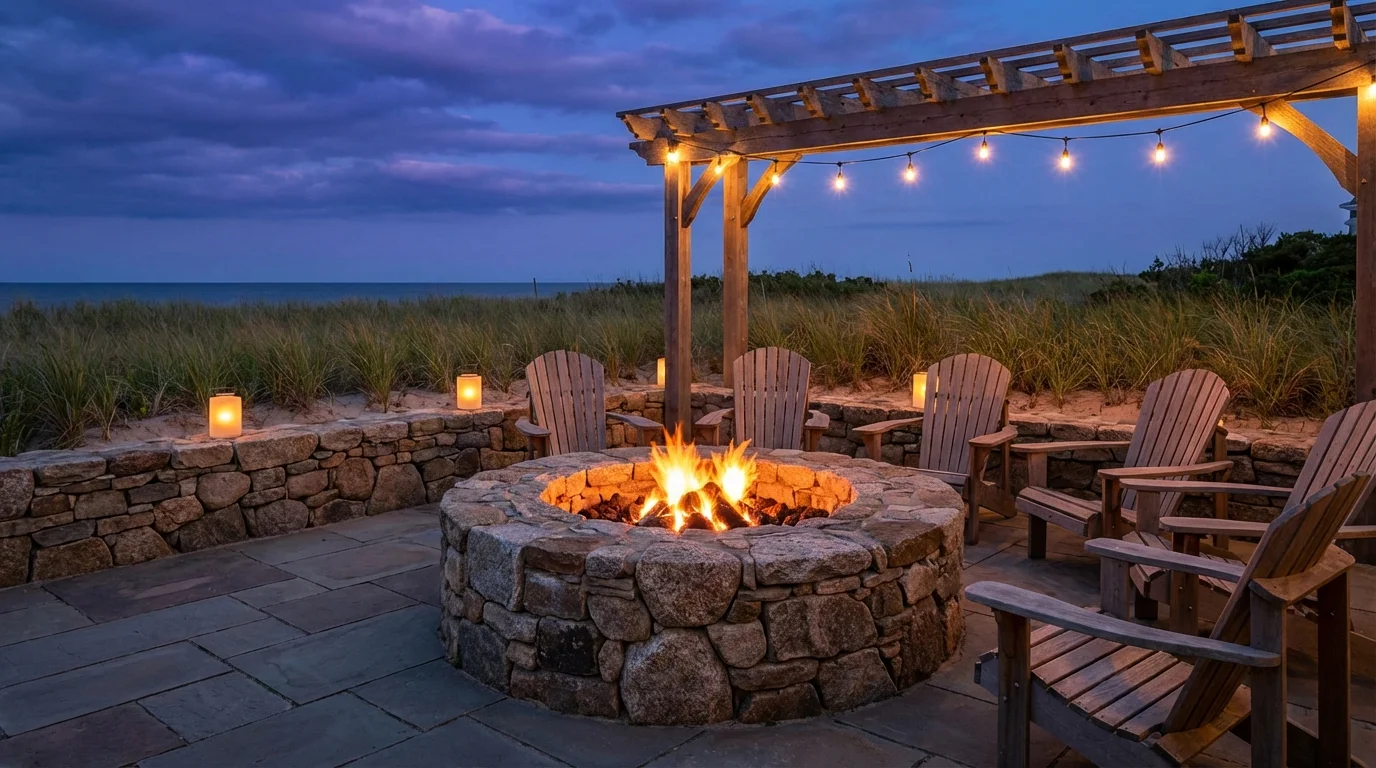
Fire Pit Designs for Coastal Evenings
Extend your Cape Cod outdoor season with fire pits that blend safety, style, and New England charm.[1][3]
As a coastal New England homeowner, you cherish those crisp evenings when the salt air carries a chill, cutting short gatherings on your natural stone patio or deck. Shorter days and unpredictable winds often force you indoors too soon, limiting the joy of outdoor living spaces that you've invested in through Cape Cod landscaping and hardscaping. But it doesn't have to be that way. Fire pit designs tailored for our region's moderate climate extend usability from early spring through late fall—even mild winter days—creating year-round havens for s'mores, storytelling, and stargazing.[2][4] Local experts emphasize wind-resistant designs and durable materials like weathered granite or sand-tone ledgestone, which withstand freeze-thaw cycles and salty breezes without cracking.[1][2] Safety is paramount too: most permanent installations require building permits, gas permits for propane or natural gas options, and professional setup to meet town bylaws and setback rules of 10-15 feet from structures.[2]
In this post, you'll discover practical coastal hardscape design ideas, from classic coastal-inspired stone circles using fieldstone to space-saving fire tables that double as cocktail surfaces for compact yards.[1][2][5] Learn top trends like integrated LED lighting, smart ignition tech, and modular kits for quick assembly, plus real Cape Cod examples that elevate your backyard into a cozy retreat. Whether rustic or modern, these fire pit designs maximize comfort, comply with codes, and capture the timeless allure of our shores—helping you reclaim those magical evenings.[3][7]
Why Fire Pits Shine in Coastal Settings
Fire pits transform chilly coastal evenings into inviting gatherings, extending the usability of outdoor living spaces in New England homes well into fall and beyond. In Cape Cod landscaping and coastal hardscape design, these features combat brisk ocean winds, salt air, and temperature swings, creating a warm focal point that enhances natural stone patios and backyards[1][4][5]. Homeowners gain a versatile hub for family s’mores, clambakes, or quiet stargazing, turning underused patios into year-round retreats[1][3]. Durable materials like natural stone, weathered granite, or fieldstone withstand harsh winters, ensuring longevity without constant upkeep[1][2][5]. For instance, a stacked stone fire pit on a flagstone patio in Scituate, MA, used local granite for a seamless blend with the shoreline aesthetic, providing wind protection and easy drainage via a gravel base[1][6]. Practical tip: Position your fire pit design 10-15 feet from structures, low trees, and prevailing winds, integrating Adirondack chairs or built-in benches for optimal flow[1][2]. Pairing with coastal hardscape design elements like retaining walls or LED uplighting amplifies ambiance, while gas-powered options simplify use and comply with local codes—essential in Massachusetts towns requiring permits[1][2][7]. Real Cape Cod examples include round bluestone pits echoing rugged shorelines, surrounded by paver patios for safe, stylish entertaining[4]. These setups not only boost curb appeal but foster memorable moments, like fall foliage views or winter ice lanterns, making coastal homes feel expansive and connected to nature[1][2][8].
Combating Coastal Challenges with Smart Materials
New England's frost, salt spray, and humidity demand resilient choices: sand-tone ledgestone mimics Cape Cod architecture, aging gracefully, while shell-blend aggregates sparkle like moonlight on waves[1][5]. A coastal Maine DIY pit from backyard stones proved budget-friendly, built in an afternoon with wheelbarrow-sourced fieldstone for authentic charm[2]. Tip: Build to footrest height for Adirondack pairing, and add seasonal decor like plaid blankets or mums for versatility[2].
Extending Evenings for Ultimate Enjoyment
Integrate fire pits with outdoor kitchens or water features for luxury—think stacked stone paired with granite counters on a natural stone patio[1]. In Harwich, MA, a custom gas New England round stone fire pit created an all-season oasis, handling freeze-thaw cycles effortlessly[7]. Always consult pros for permits and safety, ensuring your coastal hardscape design shines safely[1][2].
Material Options: Stone vs. Pavers
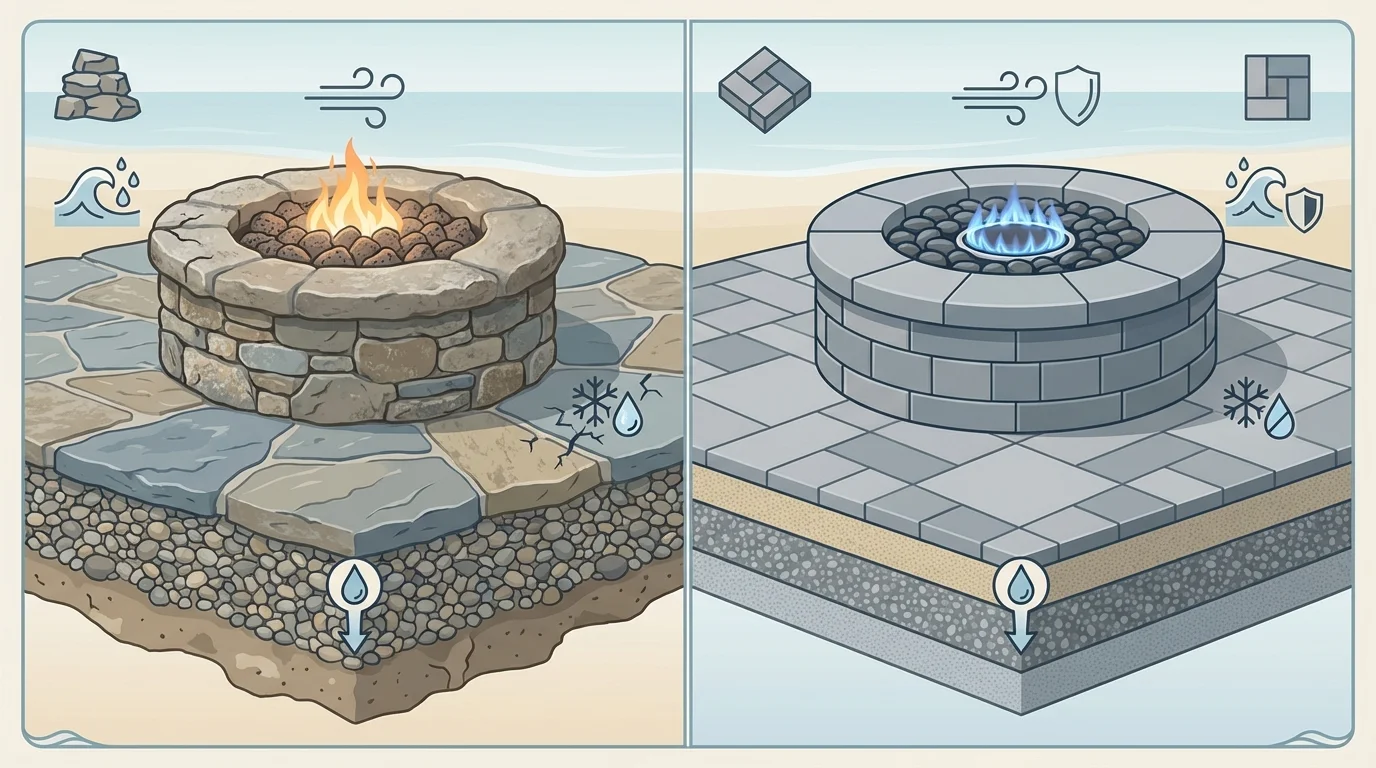
When designing fire pit designs for coastal evenings in New England, choosing between natural stone and pavers is key to creating durable outdoor living spaces that withstand salt air, freeze-thaw cycles, and high winds. Natural stone, like fieldstone, bluestone, or weathered granite, offers timeless rustic appeal and superior heat retention, making it ideal for Cape Cod landscaping where it blends seamlessly with the shoreline aesthetic[1][3][6]. For instance, a stacked stone fire pit built from local Maine fieldstones, as seen in coastal DIY projects, provides excellent wind protection and integrates into the landscape like a natural outcrop, extending usability into crisp fall evenings[2]. In contrast, pavers—such as concrete, travertine, or brick—deliver a cleaner, more modular look with easier installation and maintenance, perfect for coastal hardscape design on natural stone patios or gravel bases[1][7]. A Harwich, MA, project paired a gas-powered stone fire pit with Terra Blend Travertine Pavers, creating a low-maintenance gathering spot that resists moisture and supports seating arrangements[7]. Both materials enhance extended usability for homeowners, but stone excels in authenticity while pavers prioritize versatility—pair either with Adirondack chairs for cozy Cape Cod nights[2].
Practical tip: For home remodeling, source natural stone from your property or local quarries like Vermont ledgestone to cut costs and add character; ensure non-porous types like granite to prevent cracking from trapped moisture[2][4]. Pavers shine in level-site installs, with drainage layers vital for New England's wet climate[1].
Advantages of Natural Stone
Natural stone fire pits, such as those using reclaimed coastal granite or sand-tone ledgestone, age gracefully in salt air environments, mimicking Cape Cod's historic foundations[3][5]. A Scituate, MA, DIY granite pit in Woodbury Gray granite withstands harsh winters while radiating warmth efficiently[9]. Benefits include low-profile integration, superior flame consistency, and sustainability—reclaimed pieces from Olde New England Granite reduce environmental impact[5]. Tip: Build 18-24 inches high for footrest comfort with chairs, and check local permits as in Massachusetts towns[1][2].
Advantages of Pavers
Pavers offer modular flexibility for natural stone patio surrounds, like flagstone or concrete rings around a steel bowl, enabling quick redesigns and budget-friendly repairs[1]. In New England installs, they pair with gas lines for clean-burning fire pits, as in Stonewood's Terra Blend setups, ensuring safety and minimal upkeep[7]. Ideal for sloped coastal yards, pavers provide stable bases; pro tip: Use on gravel for drainage to combat frost heave[1]. This choice extends evenings year-round without the heft of full stone builds.
Safe Installation Amid Wind and Salt
For coastal New England homes, installing a fire pit design that withstands brisk winds and pervasive salt air ensures outdoor living spaces remain usable well into crisp fall evenings and beyond. In regions like Cape Cod, where onshore gusts carry chloride-laden moisture miles inland, standard installations fail quickly due to corrosion and flame instability[1][2]. Opt for marine-grade materials like 316 stainless steel burners and hardware, which contain molybdenum for pitting resistance against salt spray—essential within five miles of the shore[1]. GFRC concrete or powder-coated marine-grade aluminum fire pits excel here, as they resist salt penetration and thermal cracking from New England's freeze-thaw cycles, outperforming 304 stainless or Corten steel that pits or rusts within seasons[2][4][5]. A real-world example: In coastal Massachusetts, a natural stone patio surrounding a GFRC fire pit lasted over eight years with minimal maintenance, thanks to its dense mix filling micro-pores against salt crystals[2][7].
Practical tips start with site assessment—map your micro-climate by measuring distance from the ocean and prevailing wind direction using local weather data. Position the fire pit on the leeward side of your home or with a natural stone windbreak, maintaining 15-25 feet setbacks from structures based on pit size (e.g., 10 feet for 24-inch models, scaling up poolside)[1][9]. Anchor elevated or rooftop units with 316 stainless steel bolts into structural framing to counter Category D wind loads common in exposed Cape Cod landscaping[1]. Install glass wind guards raised above the burner surface to shield flames from 5-10 mph gusts while allowing airflow, preventing smoke drift and ensuring even heat—vital for coastal hardscape design[1][8]. Pair with a natural stone patio using bluestone or granite, sealed against salt efflorescence, for a seamless home remodeling integration that elevates usability[7].
Material Selection for New England Durability
Choose GFRC concrete for permanent fire pits in high-salt zones; its glass fibers prevent cracking, and marine mixes with fly ash reduce permeability[2]. Marine-grade aluminum suits movable setups—lightweight for storm storage, with five-year integrity in salty air per Virginia tests adaptable to New England[2][5]. Avoid standard concrete or non-marine steels; they degrade rapidly[1][2].
Wind-Resistant Placement and Anchoring Tips
Orient pits perpendicular to dominant winds, using landscape berms or pergolas as baffles without blocking ventilation[1][9]. Test for 10 mph crosswinds pre-install; add engineered tie-downs for pits over 400 lbs. Regular rinsing with fresh water extends life, making your coastal hardscape design a reliable evening hub[1][3].
Creating Intimate Gathering Spaces: Fire Pit Patios for Coastal New England Evenings
A well-designed fire pit patio transforms your coastal backyard into an extended living space that invites year-round entertaining and relaxation. For homeowners in New England, the key to maximizing outdoor enjoyment lies in thoughtful hardscape design that combines durability, comfort, and aesthetic appeal. By pairing your fire pit with a carefully planned patio layout, you create a functional gathering zone that feels like a natural extension of your home.[1]
The foundation of any successful fire pit design begins with material selection. Natural stone, granite, and bluestone are ideal choices for coastal properties because they withstand freeze-thaw cycles and salt air exposure.[1][3][4] Consider using sand-tone ledgestone or weathered granite for cap stones and accent elements—these materials echo the historic architecture of traditional Cape Cod homes while aging gracefully in harsh coastal conditions.[4] For added coastal character, shell-blend aggregates incorporate actual shell fragments that catch firelight and create subtle sparkles reminiscent of moonlight on water.[4]
Patio configuration matters significantly for comfort and safety. Position your fire pit away from structures, overhanging branches, and windy areas.[1] Surround the pit with a flagstone patio or paver patio to define the space and provide a polished finish that complements your landscape design.[1] Build your fire pit tall enough—ideally 18-24 inches—to double as a footrest when paired with upright Adirondack chairs, making all the difference for cozy evenings.[2]
Furniture and Seasonal Styling
Arrange classic white Adirondack chairs in a semi-circle around your fire pit to encourage conversation and connection.[2] Layer in cozy throws, vintage glassware, and seasonal touches like pumpkins or lanterns to enhance the ambiance throughout the year.[2] In summer, keep styling simple with blue glassware and light throws; come fall, bring out plaid blankets and harvest-inspired accents.[2]
Drainage and Practical Considerations
Moisture control is essential in Rhode Island's coastal climate and throughout New England.[7] Ensure your paver patio or flagstone patio includes proper drainage to prevent water pooling around your fire pit.[1][7] Before construction, verify local permit requirements and town bylaws—some Massachusetts towns require permits or safety inspections.[1] Professional installation ensures compliance with all safety codes while creating a structurally sound gathering space.[1]
Conclusion
Transforming your coastal New England backyard into a haven for fire pit designs means embracing durable materials like natural stone, granite, bluestone, concrete, and steel that withstand salt air, frost, and freeze-thaw cycles—key for year-round enjoyment in Cape Cod or Maine evenings.[1][3][4] From classic stacked stone fire pits framed by flagstone patios and Adirondack chairs to modern concrete fire tables paired with water features or outdoor kitchens, these designs create cozy gathering spots that enhance curb appeal and family memories.[1][2][5] Prioritize safe locations away from structures, integrate paver patios for drainage, and add lighting or seating for accessibility and ambiance.[1][7] Whether DIY with local fieldstone or professionally installed gas models, focus on local codes, permits, and wind-resistant builds for coastal resilience.[1][4]
Key takeaways: Select weather-resistant materials, ensure proper placement, and blend with hardscaping like retaining walls or pathways. Next steps: Sketch your ideal layout, source native stones, and check town bylaws.
Ready to ignite your coastal evenings? Contact Robert's Landscape for expert design and installation tailored to your New England home.
Frequently Asked Questions
What are the best materials for fire pits in coastal New England?
Opt for natural stone like granite, fieldstone, or bluestone; concrete; or steel fire bowls to resist salt air, frost, and temperature swings. These durable options, such as sand-tone ledgestone or weathered granite, echo local architecture and handle freeze-thaw cycles without cracking, ensuring longevity in harsh coastal climates.[1][3][4]
Do I need a permit for a backyard fire pit in New England?
Yes, many Massachusetts and Cape Cod towns require permits or safety inspections for fire pits. Professionals handle local codes, drainage, and fuel types (wood, gas, propane) to ensure compliance. Always verify bylaws for wind-resistant designs and professional gas installations.[1][4]
How do I decorate a coastal fire pit area for evenings?
Surround with Adirondack chairs, cozy throws, and seasonal accents like pumpkins or lanterns. Add paver patios, LED uplighting, pathways, or water features for style and safety. In small spaces, use foldable seating and sleek bowls for a timeless New England vibe.[1][2]
References
- Source from svsmasonry.com
- Source from salcorplandscaping.com
- Source from capecodhardscapes.com
- Source from fostercreativedesigns.com
- Source from www.stonewoodproducts.com
- Source from www.casualdesignsofcapecod.com
- Source from www.houzz.com
- Source from www.landscapecapecod.com
- Source from landscapingbyjmichael.com
- Source from www.dabblinganddecorating.com